

When comparing drylining vs traditional plastering for commercial fit-out projects, it is important to understand how each method affects installation, finishes, and construction programmes.
Both approaches have their advantages, depending on the project’s requirements. Drylining typically involves fixing plasterboard to metal framing or suitable backgrounds, while traditional plastering uses wet-applied materials to create finished surfaces. Factors such as programme deadlines, building conditions, acoustic performance, and the required finish can influence which approach is more appropriate.
In this guide, we compare drylining vs traditional plastering for commercial fit-out projects, exploring their applications, installation considerations, and key differences to help construction professionals make informed decisions.
What Is Drylining and How Does It Work?
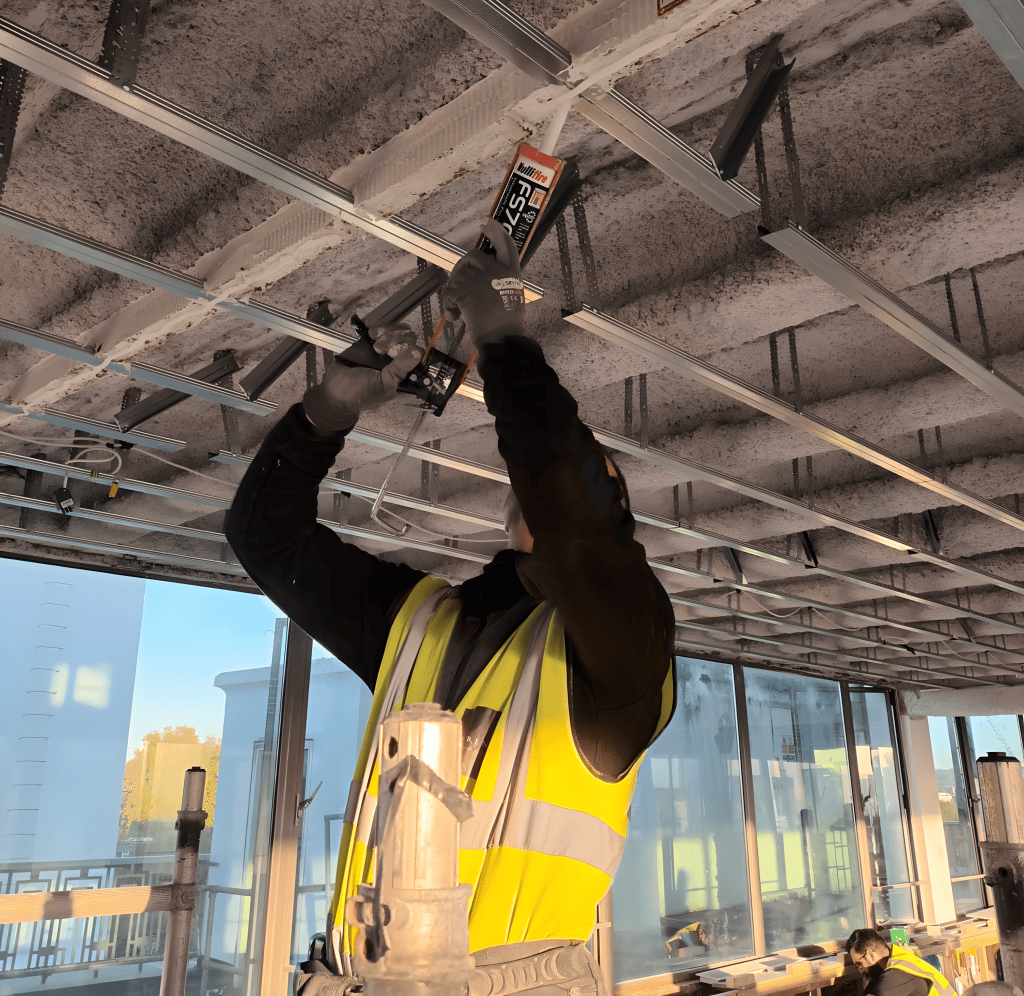
Drylining is a construction method used to create internal walls, partitions, and ceilings using plasterboard and supporting framing systems. It is widely used in commercial fit-out projects because it offers a practical way to form internal spaces while accommodating different building layouts and performance requirements.
In commercial construction, drylining commonly involves fixing plasterboard to lightweight metal stud partitions, ceiling frameworks, or suitable existing surfaces. Depending on the project specification, systems may incorporate insulation, specialist plasterboards, and multiple board layers to meet acoustic, fire resistance, and other performance requirements.
Once the boards are installed, joints and surfaces can be prepared using appropriate finishing methods, including jointing compounds or a plaster skim where specified. The result is a smooth surface ready for decoration, provided the installation and finishing work meet the required standards.
What Is Traditional Plastering?
Traditional plastering involves applying wet plaster to suitable walls or ceilings to create a smooth, durable surface ready for decoration. Depending on the substrate and project requirements, this may involve multiple coats of plaster or a finishing skim over a prepared surface.
In commercial fit-out projects, traditional plastering is often used where existing masonry or solid surfaces require finishing, or where the specification calls for a particular plaster system. The process requires careful surface preparation, skilled application, and sufficient drying time before subsequent decorating work can begin.
Unlike drylining, which primarily uses plasterboard and framing systems to form internal spaces, traditional plastering focuses on applying wet materials to suitable surfaces. Both methods can deliver high-quality finishes, but their suitability depends on the building structure, programme, design requirements, and intended use of the space.
Drylining vs Traditional Plastering: Key Differences
Both drylining and traditional plastering can deliver high-quality internal finishes, but they differ in installation methods, project timelines, and practical applications.
Installation Speed
Drylining can often be installed more quickly, particularly when creating partitions or lining large commercial spaces. Traditional plastering involves wet application and requires suitable drying time before decorating can proceed.
Flexibility and Design
Drylining systems are well suited to creating internal partitions, suspended ceilings, and layouts that accommodate building services. Traditional plastering is commonly used to finish suitable existing walls and ceilings.
Project Coordination
Drylining installations can be coordinated with electrical, mechanical, and other building services during the construction programme. Traditional plastering also requires careful scheduling, particularly around surface preparation, drying, and subsequent finishing work.
Finish Quality
Both methods can produce smooth, professional finishes when installed correctly. The final result depends on workmanship, substrate conditions, materials, and the project specification.
Cost Considerations
The most cost-effective option depends on the scope of work. Drylining may offer programme and installation advantages for larger fit-outs, while traditional plastering may be appropriate for particular surfaces or refurbishment requirements.
Contractors should also consider the relevant requirements outlined in the UK government’s Approved Documents for Building Regulations
Which Is Better for Commercial Fit-Out Projects?
The best choice between drylining and traditional plastering depends on the requirements of the commercial fit-out project.
For large commercial interiors, drylining is often a practical solution because it allows contractors to create partitions, wall linings, and ceiling systems efficiently. Its flexibility makes it particularly suitable for offices, retail spaces, and other commercial environments where layouts and building services must be carefully coordinated.
Traditional plastering remains a valuable option for projects requiring wet-applied finishes, particularly when working with existing masonry surfaces or specific refurbishment requirements.
In many commercial fit-out projects, combining both methods can provide the best results. An experienced contractor can assess the project specifications, programme, and required finish to recommend the most appropriate approach.
Choosing the Right Approach for Your Project
Both drylining and traditional plastering have an important role in commercial construction. Understanding their differences can help main contractors, developers, and project managers select the most suitable solution for their fit-out requirements.
At OSREND LTD, we provide professional drylining services and plastering services for commercial projects across London and the South East. Our team works with contractors to deliver high-quality internal finishes while supporting project specifications and construction programmes.
Planning a commercial fit-out project? Contact OSREND LTD to discuss your drylining and plastering requirements and request a no-obligation quotation.